
Peptide COA Guide for Australian Researchers
Research Peptides Australia, Quality Control, Peptide Certificate of Analysis
Peptide Certificates of Analysis (COA): A Practical Guide for Australian Researchers
Understanding a peptide certificate of analysis is essential if you are working with research peptides in Australia. This guide explains what a peptide COA is, what it should include, how to read it confidently, and how Peptides Collective in Perth, WA, supports Australian researchers and health professionals with transparent quality documentation.
What Is a Peptide Certificate of Analysis?
A peptide certificate of analysis (COA) is an official quality document issued for a specific batch of peptide. It summarises the analytical testing performed on that batch and confirms whether it meets predefined specifications. For Australian researchers and health professionals, the COA is your primary assurance that the peptide you receive is accurately identified, sufficiently pure, and suitable for its intended research-only use.
When you order from a reputable supplier such as Peptides Collective, each batch of peptide is accompanied by a COA generated from laboratory testing, typically using validated HPLC peptide testing and mass spectrometry. Rather than relying on marketing claims, you can review objective data before the peptide enters your experimental workflow.
What Should a Peptide COA Include?
While formats vary between laboratories, a robust peptide certificate of analysis will typically contain the following key elements:
Product name and sequence: The peptide name and amino acid sequence, allowing you to confirm that the correct molecule has been supplied.
Purity percentage (%): The proportion of the sample that is the desired peptide, usually determined by HPLC. For most research applications, purity of at least 95% is expected, although some exploratory work may tolerate slightly lower levels if clearly disclosed.
HPLC method details: Information on the chromatographic conditions used for HPLC peptide testing, such as column type, gradient, detection wavelength, and runtime. This helps you interpret the chromatogram and compare results across batches or suppliers.
Mass spectrometry data: The observed molecular weight (m/z) compared to the theoretical mass of the target peptide. A close match confirms the peptide’s identity and helps exclude major sequence errors or modifications that were not specified.
Batch or lot number: A unique identifier tying the COA to the exact batch you receive. This is critical for traceability, troubleshooting, and reproducibility in published research or clinical-adjacent projects.
Test date and release date: When the analyses were performed and when the batch was released. This helps you understand how recently the peptide was tested and supports your internal quality documentation.
Storage recommendations: Guidance such as “store at −20 °C, protected from light, desiccated” and recommendations for reconstitution and aliquoting. Appropriate storage is essential to maintain peptide stability and performance over time.
High-quality COAs may also include additional tests (for example, water content, counter-ion content, or microbial limits) where relevant. For research peptides Australia–wide, these details support more rigorous method development and data interpretation.
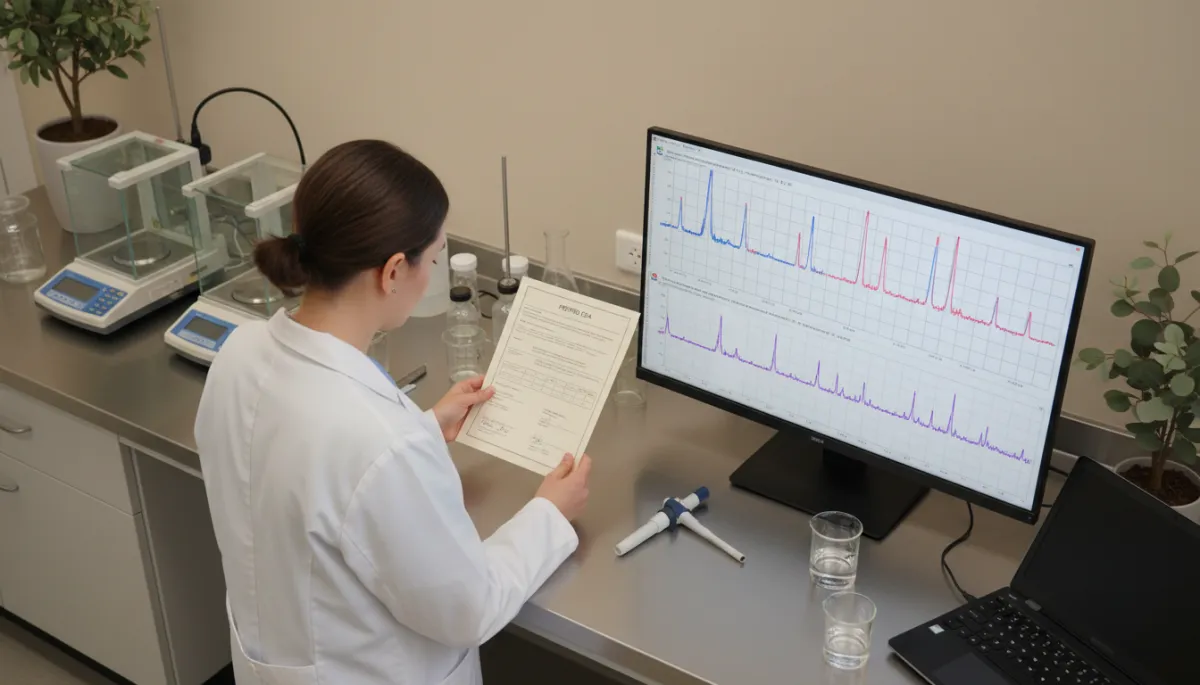
Consistently reviewing COAs helps Australian labs maintain reproducible, defensible peptide research.
How to Read a Peptide COA: A Practical Checklist
When a new batch arrives, working through a simple checklist can help you evaluate the COA quickly and consistently:
Confirm the identity: Check the peptide name, sequence, and any modifications (for example, acetylation, amidation) against your purchase order or protocol.
Match the batch number: Ensure the batch or lot number on the COA exactly matches the label on the vial you received from the supplier.
Review peptide purity testing results: Look at the purity percentage, typically reported from HPLC. Confirm that it meets your internal acceptance criteria (for example, ≥95% for most in vitro work, higher for more sensitive applications).
Check HPLC chromatogram and method: If a chromatogram is provided, confirm a dominant peak representing the main peptide with minimal significant impurities. Review method notes to understand detection wavelength and run conditions.
Verify mass spectrometry data: Compare the reported observed mass with the theoretical mass of your peptide. A close match (within the expected instrument tolerance) supports correct synthesis and identity.
Note the test date: Confirm that testing is recent enough for your quality system and that there is no indication of the batch being past any recommended retest date.
Review storage and handling guidance: Align your lab’s storage conditions with those specified on the COA to maintain stability and avoid degradation-related variability.
📌 Key Takeaway: File each peptide certificate of analysis with your batch records or electronic lab notebook. This supports reproducibility, audit readiness, and publication requirements.
Red Flags to Watch for in a Peptide COA
Not all COAs are created equal. When assessing research peptides in Australia, be alert to the following warning signs:
Missing or vague analytical methods: A peptide COA that lists purity without specifying the analytical technique (for example, HPLC) or conditions makes it difficult to interpret or compare results.
No mass spectrometry confirmation: For most peptides, MS data is standard. Absence of mass data can raise questions about sequence verification and identity control.
Unusually low or rounded purity values: Purity figures such as exactly “90%” without supporting chromatograms, or unexpectedly low purity for a supposedly “premium” product, may indicate limited quality control or aggressive marketing language.
Missing batch number or test date: Without clear identification and dating, the COA cannot be reliably linked to your vial, undermining traceability and compliance in regulated or clinical-adjacent environments.
Inconsistent branding or formatting: A COA that appears generic, poorly formatted, or inconsistent with the supplier’s usual documentation may warrant further verification, especially if sourced from an online marketplace.
⚠️ Warning: If a supplier cannot provide a batch-specific COA on request, consider this a major red flag and reassess whether to use their peptides in your research.
Why COAs Matter When Choosing a Peptide Supplier in Australia
For Australian laboratories, the quality of research peptides directly affects data reliability, reproducibility, and ethical oversight. A comprehensive, transparent peptide certificate of analysis demonstrates that the supplier has invested in robust quality systems and third-party or in-house analytical capability. This is particularly important when working under institutional review, Good Laboratory Practice (GLP)-like frameworks, or when data may inform clinical decision-making down the track.
Partnering with a local supplier such as Peptides Collective (Perth, WA) offers additional benefits. Local time zones, clear communication, and an understanding of Australian regulatory expectations make it easier to obtain documentation, clarify analytical methods, and resolve any quality queries quickly. Ready access to batch-specific COAs supports your internal governance processes, including ethics submissions, SOP development, and quality audits.
How to Request a COA from Peptides Collective
Peptides Collective provides COAs for its research peptide range and encourages Australian researchers to review them as part of routine quality due diligence. Obtaining a peptide COA is straightforward:
Have your order details ready: Note the product name, peptide sequence (if applicable), order number, and batch or lot number printed on the vial label.
Contact Peptides Collective: Use the contact form, email address, or customer portal listed on the Peptides Collective website to submit your request, specifying that you require the peptide certificate of analysis for your batch.
Receive the COA: The team will provide a digital copy of the COA, usually in PDF format, showing peptide purity testing results, HPLC method, mass spectrometry data, batch number, test date, and storage recommendations.
File and review: Save the COA in your laboratory’s quality records, review it against your acceptance criteria, and link it to any associated protocols or experiments.
💡 Pro Tip: When planning a new project, request example COAs from Peptides Collective in advance. This allows you to align your experimental design and documentation with the analytical specifications of the peptides you intend to use.
Frequently Asked Questions About Peptide COAs
What does COA stand for?
COA stands for Certificate of Analysis. A peptide certificate of analysis summarises the analytical testing performed on a specific batch of peptide and confirms whether it meets defined quality specifications for research use.
What are acceptable purity levels for research peptides?
Acceptable purity depends on the application, but many Australian laboratories specify ≥95% purity for routine in vitro experiments and method development. For highly sensitive assays or in vivo research, higher purities (for example, ≥98%) may be preferred. The key is that the peptide COA clearly reports the purity percentage and the method used for peptide purity testing so you can make an informed decision.
How do I request a peptide COA from Peptides Collective?
You can request a COA by contacting Peptides Collective via their website or customer support email. Provide your order number, product name, and batch number, and specify that you require the peptide certificate of analysis for your records. The team will supply the relevant COA and can answer questions about the analytical methods used.
What is HPLC and why is it used for peptide testing?
HPLC (High-Performance Liquid Chromatography) is an analytical technique used to separate, identify, and quantify components in a mixture. In the context of research peptides Australia–wide, HPLC peptide testing is the standard method for determining purity. The COA will often include the HPLC chromatogram and method conditions, demonstrating that the main peak corresponds to the desired peptide with minimal impurities.
Can I trust a peptide supplier that does not provide COAs?
In general, you should be cautious about suppliers who cannot or will not provide batch-specific COAs. Without a peptide COA, you have limited visibility into the identity, purity, and testing history of the peptide, which can compromise your data and complicate ethics or regulatory review. Reputable suppliers such as Peptides Collective routinely provide certificates of analysis and are transparent about their analytical processes.
SEO Metadata
Meta Title: Peptide Certificate of Analysis (COA) Guide for Australian Researchers | Peptides Collective
Meta Description: Learn how to read a peptide certificate of analysis, what a COA should include, red flags to avoid, and how Peptides Collective in Perth, WA, supports high-quality research peptides across Australia.
Meta Keywords: peptide certificate of analysis, peptide COA, peptide purity testing, research peptides Australia, HPLC peptide testing, Peptides Collective Perth
Research-Use-Only Disclaimer
All peptides supplied by Peptides Collective are intended strictly for laboratory research use only. They are not medicines, therapeutic goods, or dietary supplements, and are not approved for human or veterinary use, diagnostic procedures, or household applications. Information in this article is provided for educational purposes to support responsible research practice and does not constitute medical, therapeutic, or regulatory advice. Researchers and health professionals should ensure that all work with peptides complies with applicable Australian laws, institutional policies, and ethics requirements.