Did You Say KLOW Stack?
Understanding the KLOW Peptide Blend:
Research Insights into Its Components and Synergy
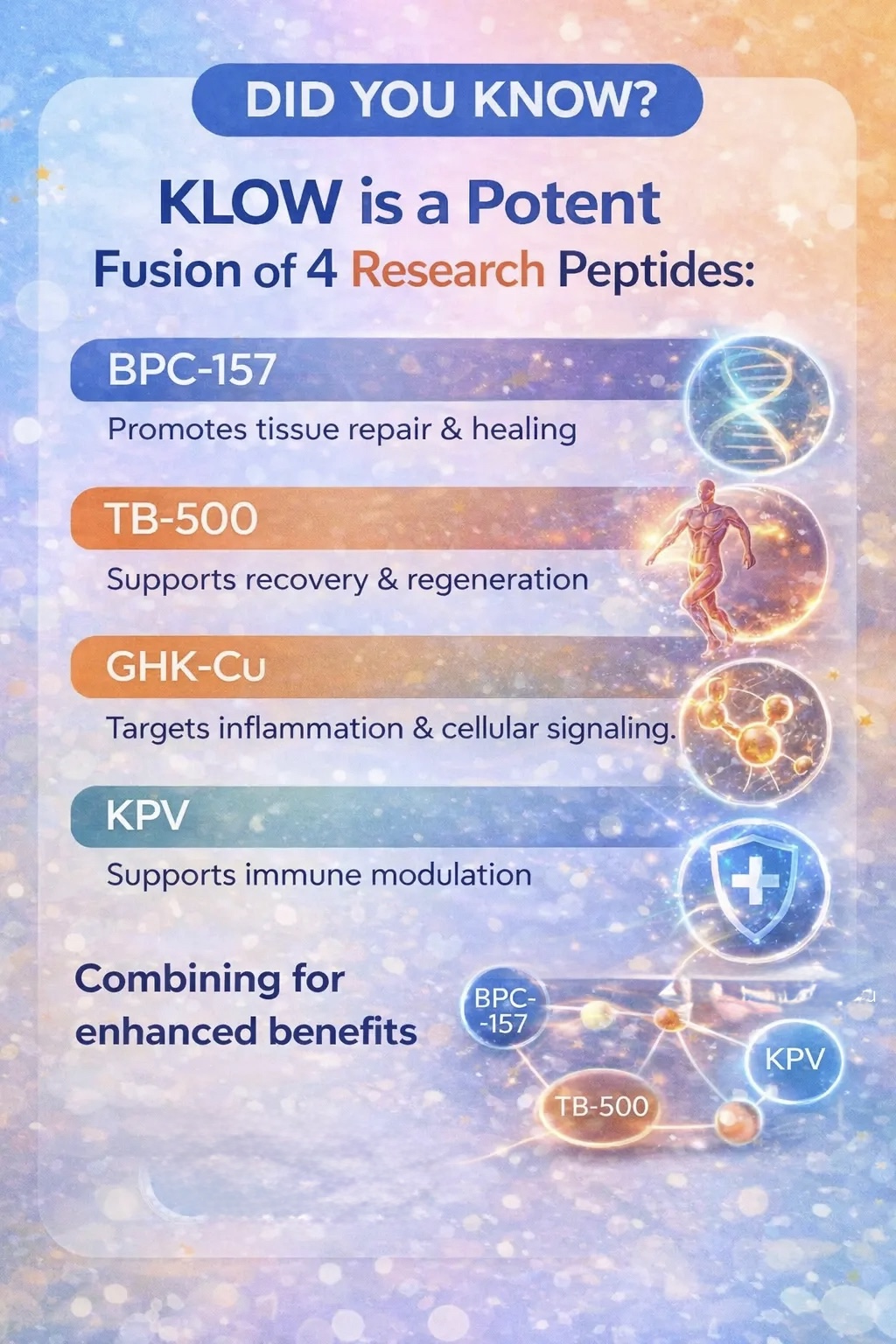
Peptide blends like KLOW, which combine BPC-157, TB-500, GHK-Cu, and KPV, have garnered attention in preclinical research for tissue repair and in inflammation models.
Available from Australian suppliers like Peptides Collective for lab and research use, KLOW targets multiple pathways.
This blog post breaks down its components, individual effects, synergistic potential, and research findings.
Individual Components of KLOW
BPC-157 (Body Protection Compound-157)
BPC-157, a gastric pentadecapeptide, promotes angiogenesis (new blood vessel growth) and fibroblast migration in tendon/muscle injury models. Studies show it upregulates VEGF receptors, accelerates collagen deposition, and protects gut mucosa in colitis research by modulating nitric oxide pathways.
TB-500
TB-500 enhances actin sequestration, facilitating cell migration and wound healing.
Preclinical data indicate that it reduces inflammation in muscle contusion models and supports cardiac repair post-injury by increasing myocyte survival.
GHK-Cu
GHK-Cu This copper-binding tripeptide regulates over 4,000 genes involved in collagen/elastin synthesis, antioxidant defence, and extracellular matrix remodelling in the body.
Research highlights its role in skin regeneration, angiogenesis, and anti-fibrotic effects in lung injury models.
KPV
KPV, an alpha-MSH derivative, inhibits NF-κB signaling to suppress pro-inflammatory cytokines (TNF-α, IL-6). In vitro studies demonstrate reduced leukocyte infiltration and preserved epithelial barriers in IBD models.
How KLOW Components Work Together
KLOW's synergy amplifies individual effects across repair stages:
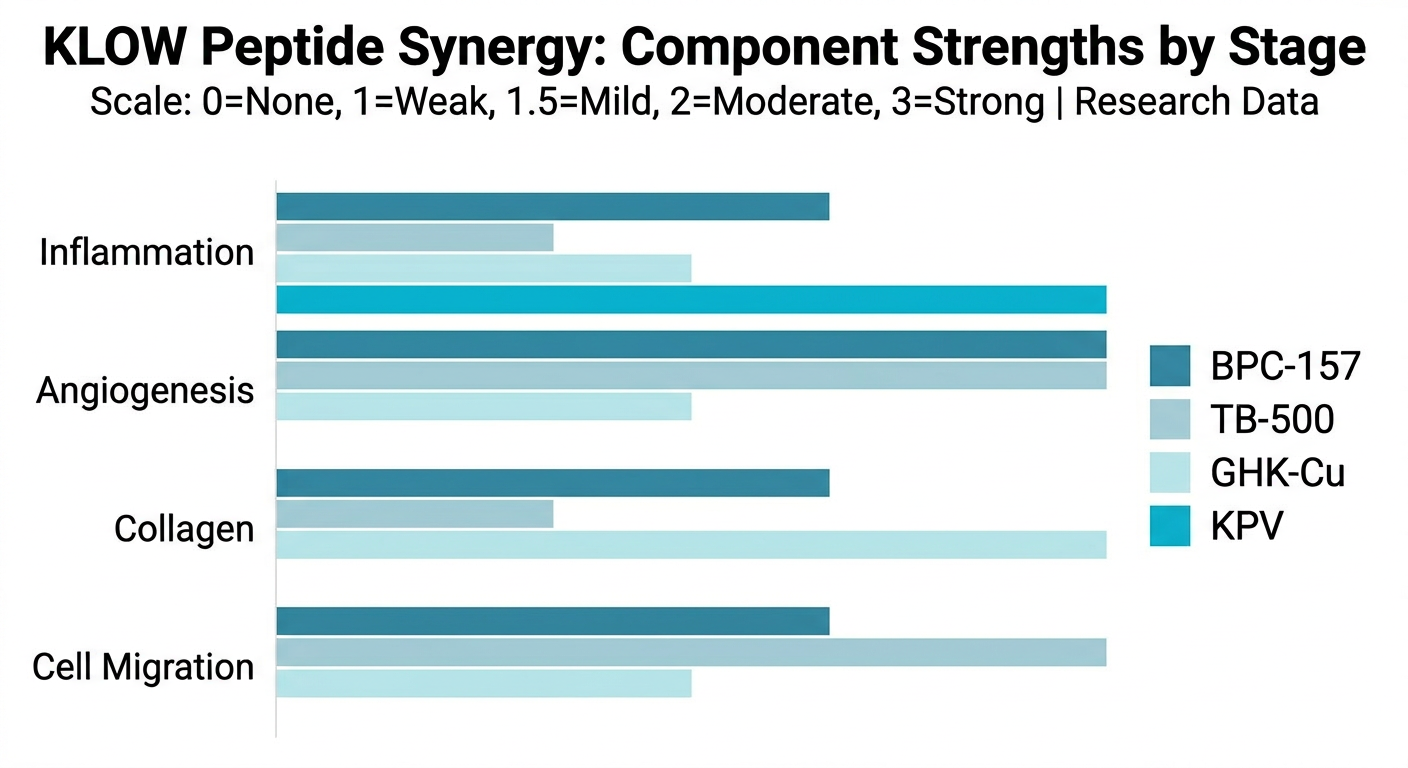
KPV curbs initial inflammation, enabling BPC-157/TB-500 to drive vascularisation and migration, while GHK-Cu rebuilds matrix. Research suggests this "multi-hit" approach outperforms single peptides in tendon tear and colitis models, minimising scarring and boosting functional recovery.
Research Success Stories
- Tissue Repair: Preclinical rodent studies report 2-3x faster tendon healing with BPC-157/TB-500 combos vs. controls; GHK-Cu addition enhances collagen alignment.
- Inflammation Models: KPV + BPC-157 reduced colitis markers by 50-70% in murine trials, preserving gut integrity.
- Regeneration: KLOW-like blends show promise in muscle injury models, with angiogenesis and reduced fibrosis noted in lab analyses.
Australian researchers access these via compliant suppliers such as Peptides Collective, which provide batch-specific COAs to ensure reproducibility.
Sourcing KLOW for Research
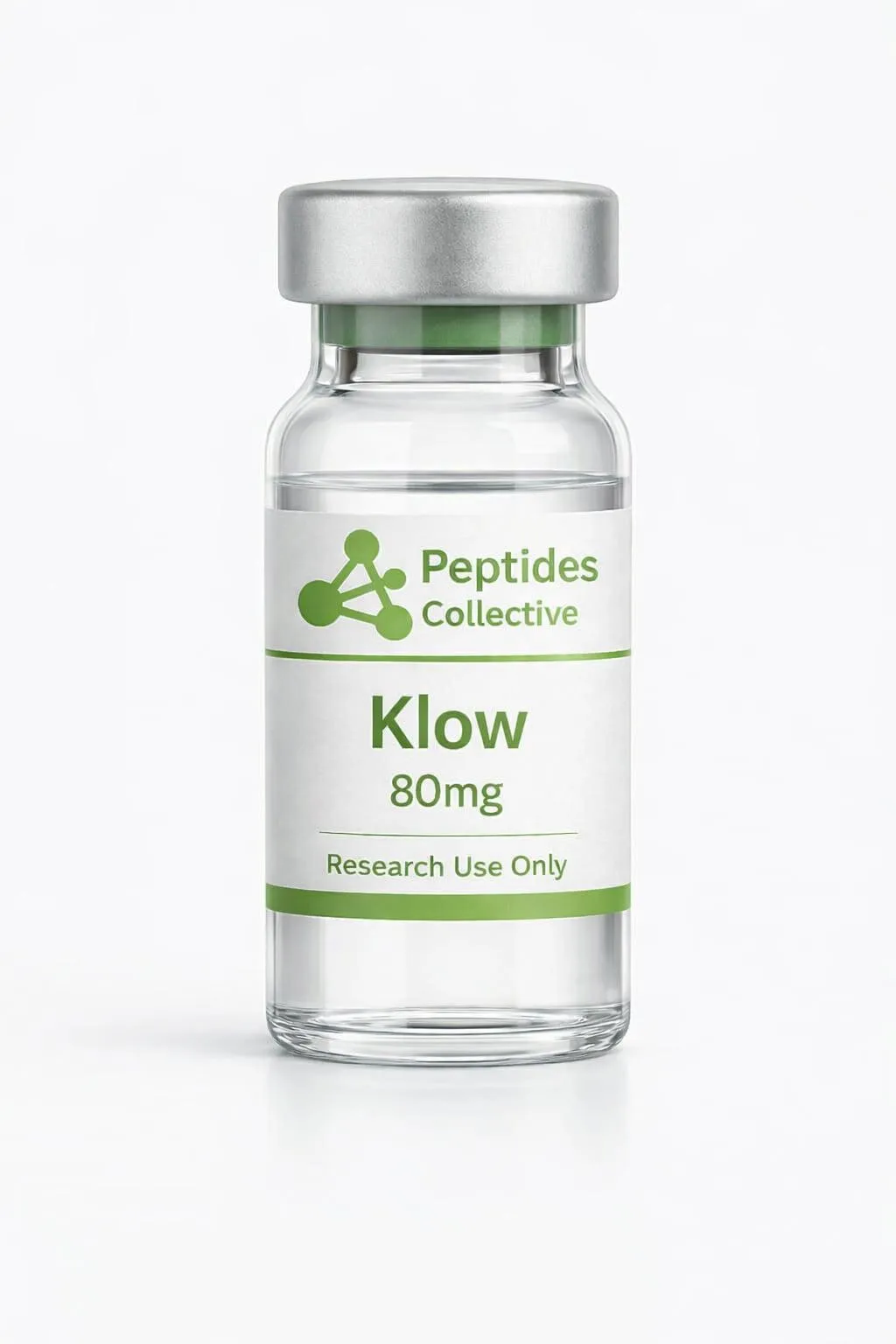
Peptides Collective provides lyophilised KLOW (e.g., 80mg blends: GHK-Cu 50mg, others 10mg each) with HPLC/MS COAs ≥99% purity. Ideal for angiogenesis, recovery, and inflammation pathway studies.
Explore KLOW's potential responsibly, elevate your research with verified quality.
References: Preclinical data from cited studies and independent research; Not medical advice.
For educational research only.
Peptides Collective supplies research peptides in compliance with Australian regulations under the Therapeutic Goods Act 1989 and state poisons laws (e.g., Medicines and Poisons Act 2014 WA).
These products are not intended for human or therapeutic use, as Schedule 4 peptides require prescriptions. Import/sale for research is permitted with proper labelling.
Proper Reconstitution Essentials
For the safe use and research of injectable peptides such as Retatrutide, KLOW Stack, and MOTS-C, reconstitute lyophilised powders with BAC Water (bacteriostatic water), a sterile saline solution containing 0.9% benzyl alcohol that helps maintain stability and prevent bacterial growth.
Always use alcohol swabs to clean vial tops and injection sites to ensure hygiene and reduce the risk of infection. We stock these on our website for convenient and healthy research.
Safe Research Tips
When conducting your own personal research, ensure that they require proper dosing and monitoring despite their favourable safety profile.
Store reconstituted vials in the refrigerator and follow research guidelines to maximise efficiency.
These peptides promote wellness when used responsibly, in line with recommended research.